Best Decking for Toronto: PVC, Composite, Cedar & IPE
Toronto winters do not play nice with decks. Moisture sneaks in during fall rain, then freezes hard, then melts, then repeats. That grind can chew through boards fast if the material choice doesn’t align with local realities.
This guide breaks down four common options for GTA homes: PVC, composite, cedar, and IPE. You will see what each one handles well, what tends to fail first, plus where each fits best in a real backyard.
M.E. Contracting designs and builds decks across Toronto with full landscape plans in view. Material choice always links back to layout, drainage, sun, and how you actually live outside.
What freeze-thaw weather does to a deck
Freeze thaw basics in Ontario
Water expands when frozen. When boards absorb moisture, that expansion pushes fiber or plastic apart in tiny ways. One cycle does little. Dozens per season create stress that shows up as cracks, warps, or soft spots.
Ontario adds extra pressure. Humid summers swell boards. Cold snaps shrink them. That constant size shift tests every fastener and joint.
Common deck failures in Toronto yards
Some problems show early. You might notice cupping where the edges rise like a shallow bowl. You may see surface checking, those thin cracks that collect grit. colour fade also speeds up under summer UV.
Other failures hide longer. Fasteners can lift as boards move. Joists may start rotting where airflow is poor. A deck can feel bouncy once footings shift in wet clay.
Salt adds a rough twist. De-icing products dry wood fibers and stain some composites. Pool chemicals can do similar damage near waterlines— material matters. Install quality matters more.
What matters most when picking deck boards here
Start with moisture resistance. If boards barely absorb water, freeze-thaw damage drops sharply.
Next comes dimensional stability. A board that stays flat across temperature swings keeps fasteners tight and gaps clean.
UV stability matters too. The Toronto sun in July can be brutal, especially on roof decks or wide open yards.
Grip matters in shoulder seasons. Wet leaves, light frost, and snow melt all create slip risk.
Maintenance time counts. Some homeowners enjoy annual staining. Others want a rinse twice per year, done.
Heat retention deserves a thought. Dark modern boards can feel scorching under bare feet in August.
Finally, look at sustainability and lifespan. A cheap board replaced early costs more overall.
Material comparison at a glance
PVC decks brings the strongest moisture defense. Composite sits close behind on premium capped lines. Cedar offers natural charm but needs care. IPE stands as a long-life hardwood with premium pricing.
Performance also depends on spacing, structure airflow, plus drainage below. A great board on a bad frame still fails.
PVC decking in freeze-thaw climates
How PVC is made and why winter likes it
PVC boards are fully synthetic. That means water absorption stays extremely low. Freeze-thaw cycles cannot pry apart fibers, because there are none.
PVC also handles cold shrinkage well. Quality lines remain steady in January winds.

Pros for Toronto homeowners
Rot and mold resistance stays excellent. Insects ignore PVC. Routine upkeep stays simple, usually soap and water.
Colour stability has improved a lot. Newer premium boards avoid chalky fade better than older stock. Many lines also include realistic grain for a less plastic look.
Cons and trade-offs
Upfront cost runs high. Some boards feel warm under full sun, especially darker shades. Lower-tier options can look glossy or artificial.
Best use cases
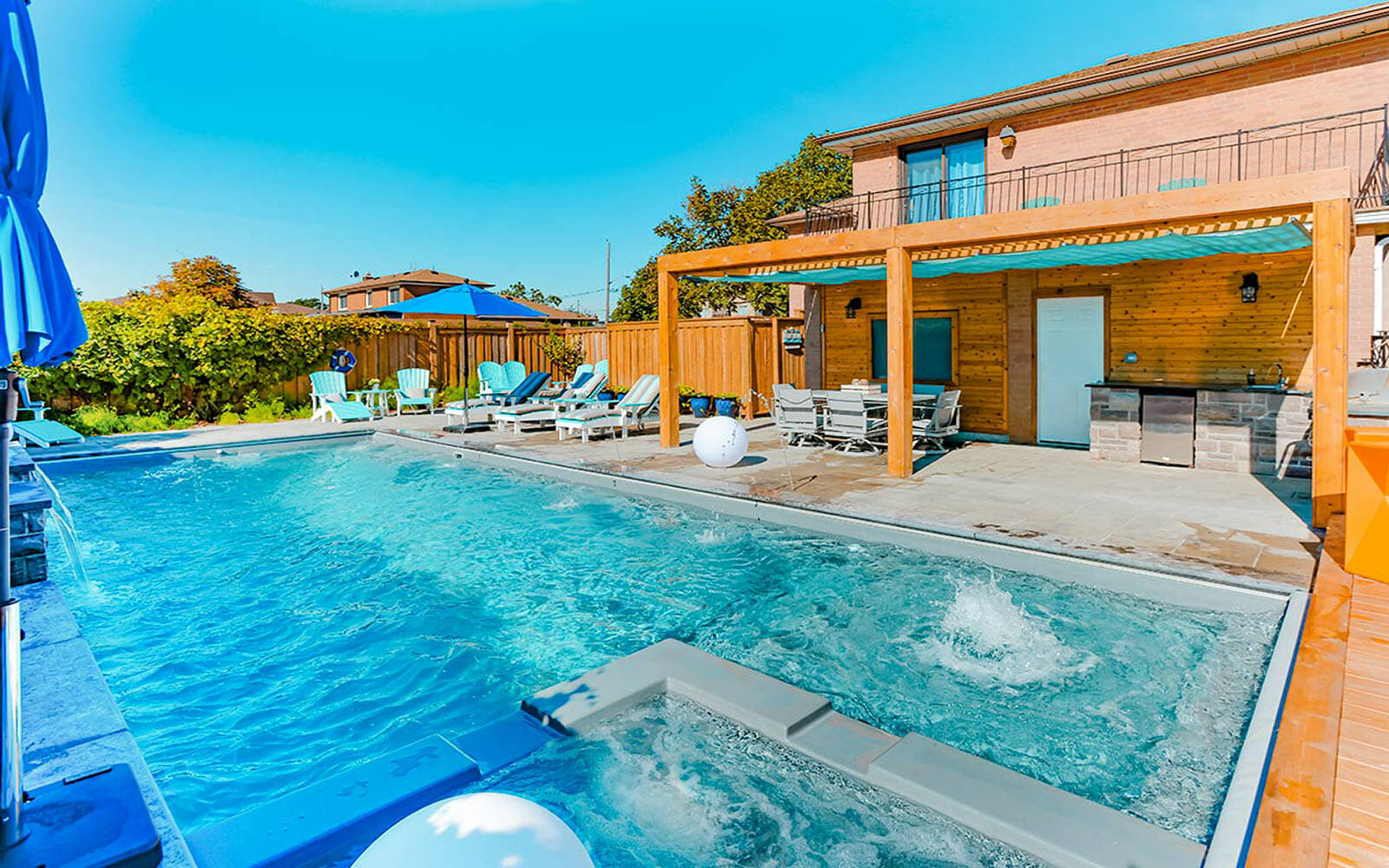
PVC shines near pools. Splash zones stay safe. Shaded yards with constant dampness also suit PVC well. Busy households that want near-zero maintenance love it.
Composite decking in freeze-thaw climates
What composite means
Composite blends wood fiber with plastic. Many brands add a protective cap around the core. Capped boards resist water far better than uncapped ones.
Quality varies widely. That detail matters in Canadian weather.
Pros for Ontario conditions
Composite stays more stable than softwood. Splitting risk drops. Surface texture gives a wood-like vibe without constant staining.
High-tier boards keep colour well. Scratch resistance has also improved on premium caps.
Cons and risks
Budget uncapped boards can absorb water through the core. That can lead to swelling or edge warping after winter. Shaded zones may grow surface mildew if airflow stays weak.
Some lines scratch more easily under patio furniture. That risk depends on the brand.
Best use cases
Composite decks works well for family decks with heavy use. Entertaining zones also fit. Clients who want wood aesthetics yet lower upkeep usually land here.
Cedar decking in freeze-thaw climates
Why cedar stays popular in Toronto
Cedar looks warm and natural. Underfoot feel stays cooler than many synthetics. Many homeowners love how cedar ages when cared for.

Pros
Cedar has natural rot resistance for a softwood. Boards can be sanded or refinished. Repairs stay easy, since single boards swap out cleanly.
Initial cost often stays lower than PVC or IPE.
Cons for freeze-thaw zones
Cedar absorbs water. That leads to checking, cupping, plus split ends over time. Without sealing, the lifespan drops fast in Ontario.
Maintenance needs commitment. Expect staining or sealing every year or two. Skipping that step invites early rot.
Best use cases
Cedar fits smaller decks where charm matters. It suits homeowners who do not mind annual upkeep. Rustic or modern natural designs pair nicely with cedar tones.
IPE decking in freeze-thaw climates
What IPE is
IPE is a dense tropical hardwood. Grain packs tightly. Water absorption stays low compared with cedar or pine.
That density creates serious durability.
Pros
IPE resists rot, insects, and surface wear very well. Lifespan often passes twenty-five years with normal care. The look feels rich, clean, and high-end.
Boards handle sun and cold without major movement. Cracking risk stays low when installed right.
Cons
Cost runs premium. Boards are heavy, which raises labor time. Cutting requires sharp tools and patience.
If you want a deep brown colour, oiling helps. If you skip oil, boards fade to a silver patina. Many people like that look. Some do not.
Best use cases
IPE decks suits luxury builds. Sunny yards love their UV toughness. Clients wanting a long life with minimal drama often choose IPE despite price.
Cost and value over time
Toronto pricing swings by layout, height, access, plus complexity. Still, broad bands help.
Cedar usually costs the least upfront. Composite lands mid-range, with big gaps between budget and premium lines. PVC tends to cost more than composite but less than IPE in many projects. IPE usually tops material charts.
Value depends on maintenance. Cedar can stay affordable if you enjoy yearly sealing. If you hate upkeep, cedar may become the most expensive after repairs. PVC and premium composite trade a higher entry cost for lower long-term time and spend. IPE offers the best lifespan value, assuming the budget supports the first build.
Installation factors that affect winter performance
Substructure choices
Deck boards only perform as well as the frame below. Pressure-treated joists remain standard. Helical piles can reduce frost heave in many GTA soils. Concrete footings also work when the depth meets the frost line.
Airflow under the deck matters. Poor ventilation traps moisture, which rots joists and grows mildew on board undersides.
Spacing, fastening, ventilation
Proper gapping lets water drain, and boards expand. Too tight leads to buckling. Too wide looks sloppy and risks heel catches.
Hidden fasteners give a clean surface. Face screws add strength, especially on wood. Choice depends on board type plus budget.
A flawless install can make composite last decades. A sloppy install can ruin PVC in five years.
De-icing and winter care
Use plastic shovels or rubber edges, not metal blades. Avoid rock salt on cedar. Choose deck safe melts when possible.
For PVC and capped composite, mild calcium-based products usually work better. Rinse salt residue in spring to stop surface haze.
How to choose based on your yard and goals
Think about daily life first.
Pool deck with constant splash. PVC wins for moisture defense. Premium composite also works if the cap stays strong.
Shaded yard under big trees. PVC stays safest. Composite needs good airflow and cleaning. Cedar needs strict sealing.
Full sun rooftop style deck. IPE handles the sun’s heat well. PVC can feel warmer, so colour choice matters.
Busy family with no time for upkeep. PVC or premium composite. Cedar may annoy you fast.
Natural wood lover who likes patina. Cedar or IPE. Both age beautifully in different ways.
Budget is tight now, upgrade later. Cedar can work if you accept maintenance. Composite mid-tier can also fit if install stays elite.
Recommendations from M.E. Contracting
Across Toronto projects, PVC often makes sense near pools or damp zones. Premium capped composite gets chosen for large entertaining decks where clients want a wood look. Cedar decks remains a great pick for smaller builds with hands-on owners. IPE lands in high-end plans where lifespan and luxury feel matter most.
Seeing boards in person helps. M.E. Contracting’s North York showroom lets you compare grain, colour, plus texture before you commit.
Conclusion
Freeze-thaw weather punishes weak materials and weak installs. PVC offers top moisture defense. Premium composite balances look good with low upkeep. Cedar rewards care with natural charm. IPE delivers long life plus a refined finish.
Choose based on sun, shade, water exposure, plus maintenance appetite. Then pair that choice with a solid structure, clean drainage, and correct spacing.
If you want help matching material to a full backyard plan, M.E. Contracting can walk you through options during a consultation or showroom visit.
Author Profile

'M.E. Contracting is one of Toronto’s premier outdoor solutions company. Founded by owners Keren and Eitan Abu, with a desire to change the face of Toronto through the revitalization of outdoor living space, M.E. Contracting was established. The “M” and “E” stand for Keren and Eitan’s daughters, Mika and Emma; from the start these two girls have inspired the vision of innovation and creativity that M.E. embodies today. Want to see for yourself? Our 7,000 square foot landscaping showroom is the only showroom in Ontario dedicated to landscaping and outdoor transformations'